Choosing between a pre-war apartment and a modern condo in Chelsea can feel like comparing character to convenience. You may be drawn to high ceilings and original details yet want quieter floors, bigger closets, or more flexible financing. This guide gives you clear, practical ways to compare the two, plus a block-by-block method to narrow your shortlist. Let’s dive in.
What pre-war and post-war mean
In New York City, you will often hear homes described as pre-war or post-war. Pre-war generally means buildings constructed before World War II. Post-war or modern refers to buildings constructed from the mid-1940s to today, including mid-century towers and newer condos with contemporary systems. These are market conventions rather than legal categories.
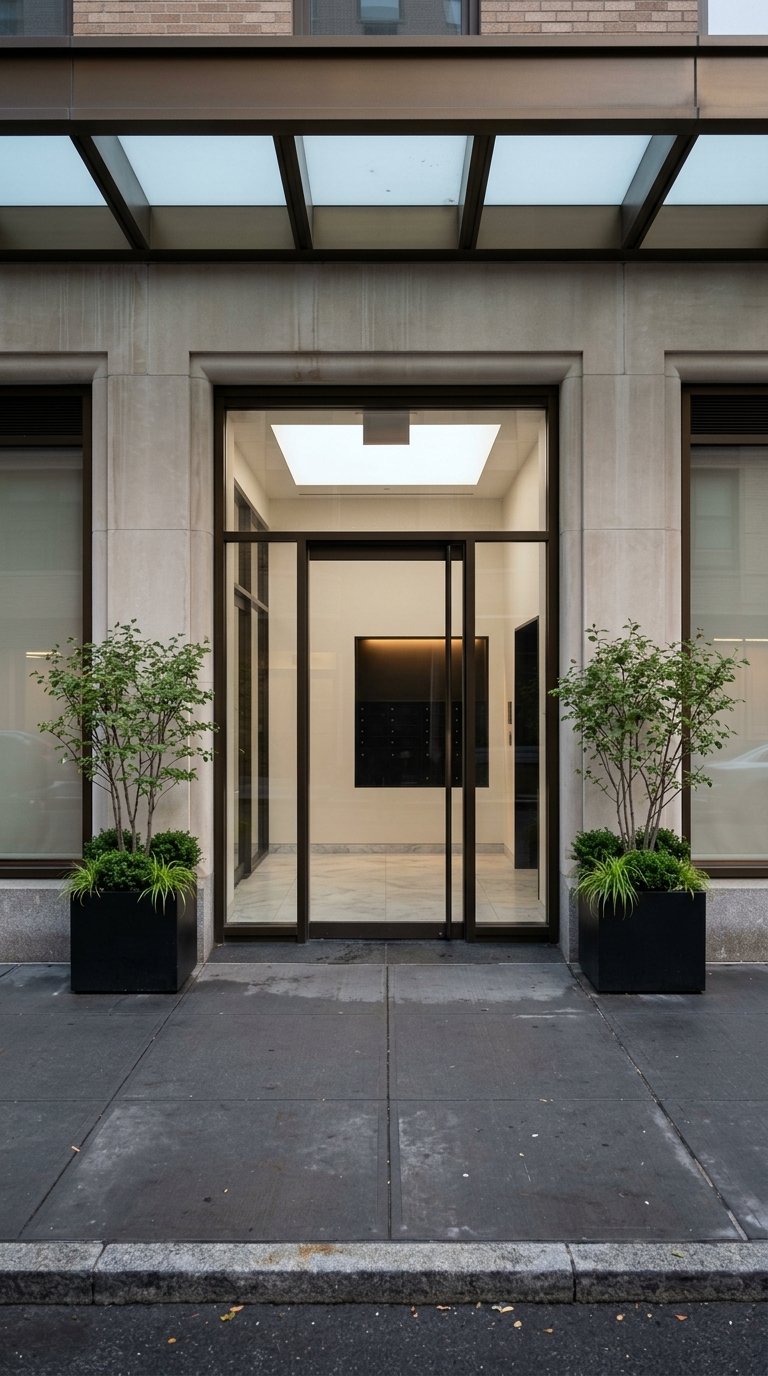
For on-the-ground shopping in Chelsea, a practical boundary runs from 14th Street up to the mid-30s and from Sixth Avenue to the Hudson River. The building stock is a true mix. You see low-rise brick and stone rowhouses and pre-war co-ops on older blocks. Along the avenues and closer to the West Side, you find more concrete and glass high-rises and modern condominiums.
Buying in Chelsea often comes down to how you weigh architectural character against layout efficiency, amenities, sound performance, and ownership rules. The sections below help you compare by what you will notice day to day.
Architecture and layouts
Structure and height
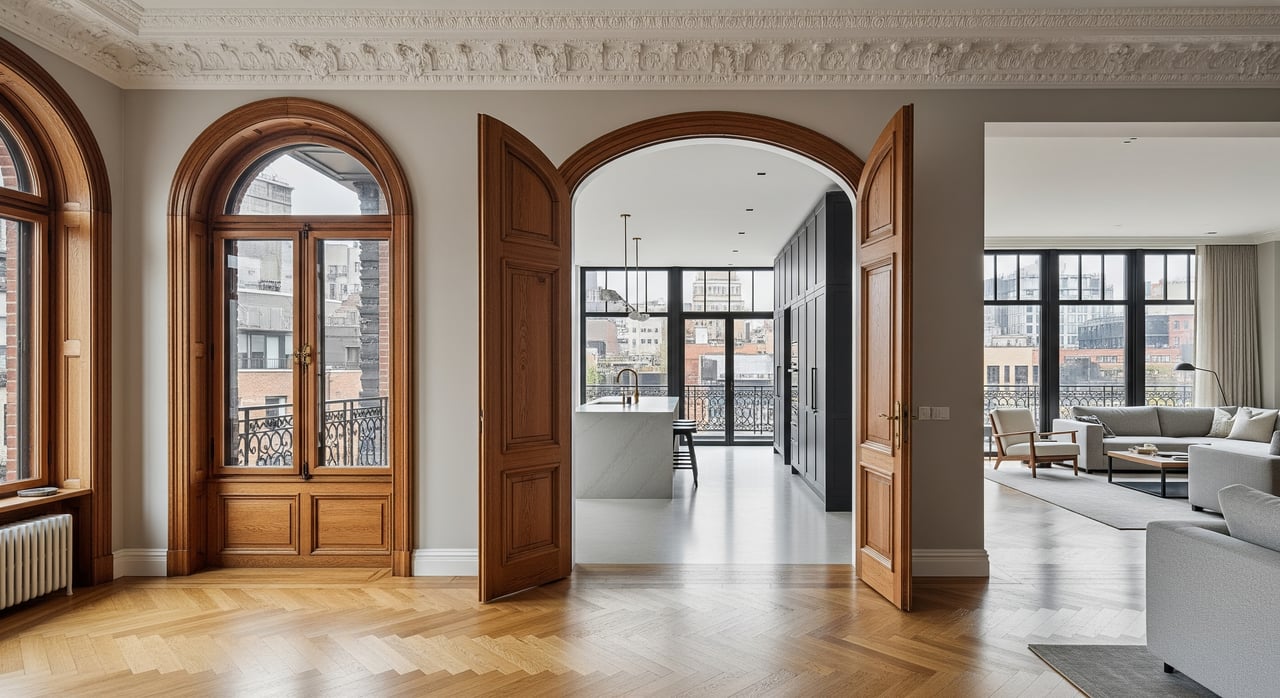
Pre-war buildings often use load-bearing masonry walls, timber joists, and plaster finishes. That structure tends to deliver tall ceilings, deep window reveals, and a sense of heft. Many buyers notice the proportion and interior millwork immediately.
Post-war and modern buildings rely more on reinforced concrete slabs and steel framing. These systems allow longer spans and more open layouts. Ceiling heights vary. Some mid-century buildings are lower than pre-war, while many luxury new builds match or exceed pre-war heights.
Rooms, flow, and storage
Pre-war homes often feature separate living and dining rooms with defined hallways. Kitchens and baths may be smaller unless a past renovation expanded them. You will likely see hardwood floors, molding, and built-ins.
Modern condos lean toward open-plan living rooms with kitchens integrated into the main space. Kitchens and baths are often larger and more updated. Newer buildings commonly add building-level conveniences like gyms, attended lobbies, roof decks, storage rooms, and modern mechanical systems.
Windows and energy comfort
Original single-pane windows are common in pre-war buildings unless replaced. That can mean more air leakage and lower energy performance without upgrades. Renovated pre-war units that add new windows and insulation can perform very well.
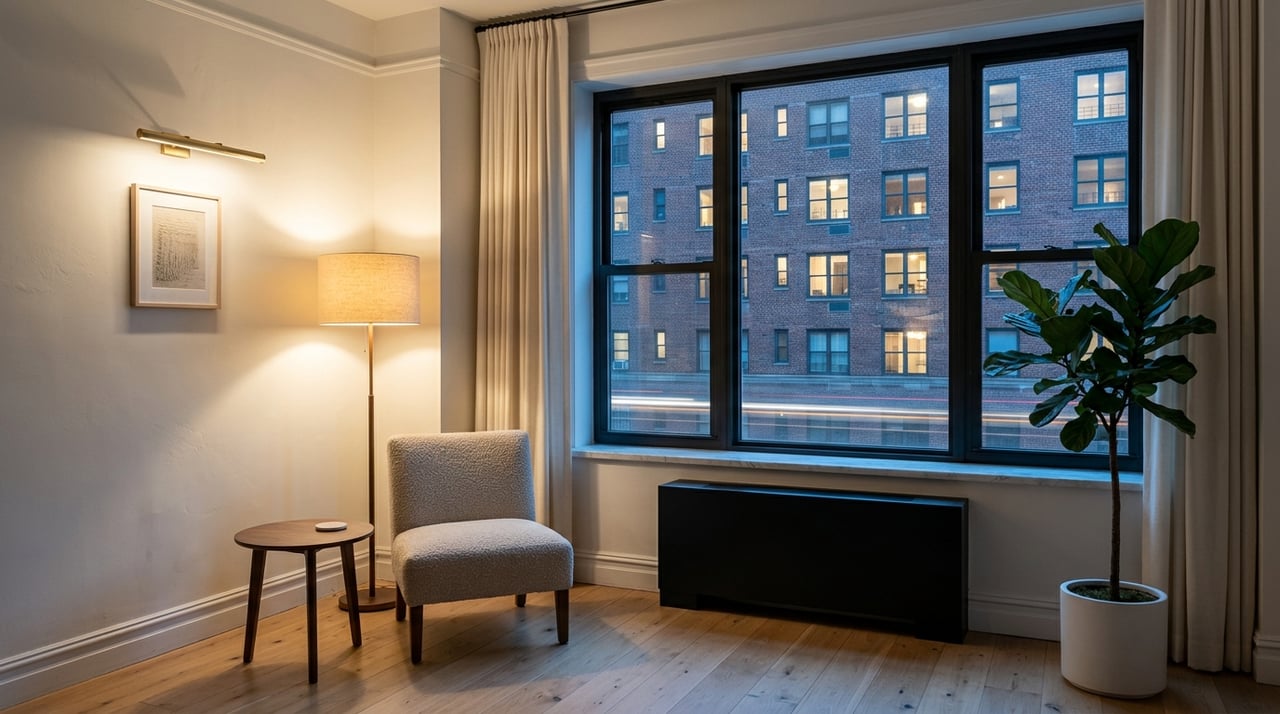
Modern buildings more often use double or triple glazing and better air sealing. That helps with both energy efficiency and exterior noise reduction. If comfort and quiet are priorities, confirm window type and condition during tours.
Sound and privacy
City apartment noise comes from three sources. Airborne noise includes voices and music. Impact noise includes footsteps or dropped items. External noise includes street activity and building mechanicals.
Pre-war masonry exterior walls can block airborne sound well and often reduce street noise, especially on upper floors. Timber joist floors in older buildings can transmit impact noise between floors if not upgraded. Modern concrete slabs tend to even out floor-to-floor sound and reduce impact transmission. New glazing and better air sealing in newer buildings usually cut exterior noise.
Use this quick sound check playbook:
- Visit at different times. Weekday daytime, early evening, and a weekend night capture typical patterns.
- Ask about unit adjacencies. Understand what is above, below, and sharing walls. Note elevator and trash rooms.
- Look for sound upgrades. Window replacements, resilient underlayments, and added insulation matter.
- Step test floors. Lightly walk different areas to gauge footfall transmission, especially in pre-war walk-ups and early elevator buildings.
Building services and ownership
How co-ops work
- In a co-op, a corporation owns the building and you buy shares with a proprietary lease. Boards have strong approval rights and review finances and applications.
- Monthly maintenance often includes your share of building taxes, any underlying building mortgage, staff, utilities, and repairs.
- Down payment expectations are commonly higher than condos. Many NYC co-ops expect 20 percent to 50 percent down, subject to building policy.
- Boards can levy assessments for capital projects. Sublet rules are often more restrictive.
How condos work
- In a condo, you own real property title to your unit. A condo board governs common areas but sales and rentals are generally more flexible than co-ops.
- You pay common charges for operations. Real estate taxes are billed to you separately.
- Financing options are typically broader. Many lenders finance condos. FHA or Fannie Mae loans depend on building eligibility.
- Reserve funds and transparent budgets are key signs of building health.
Financing and resale
- Co-ops can limit investor demand and can lengthen timelines through board approvals. That can affect resale speed and liquidity.
- Condos are easier to sell to a wider buyer pool, including investors and second-home buyers, which can help liquidity.
- Both co-ops and condos can have flip taxes or transfer fees. Confirm these early since they impact net proceeds and closing costs.
What to check before you offer
Gather documents and details early. A focused checklist saves time and surprises:
- Building age, structure, and size. Note year built, stories, unit count, and construction type.
- Mechanical and envelope. Window type, heating and cooling, electrical panel type, and any recent system upgrades.
- Financials and plans. Audited financial statements, budgets, reserve levels, and any planned capital work.
- Policy and rules. House rules, sublet and investor policies, pet policies, and any flip tax or transfer fee.
- Monthly costs. Maintenance or common charges and what they include, plus real estate tax treatment.
- Recent comps and velocity. Price per square foot, average days on market, and assessment history.
- Compliance and repairs. Open DOB violations, façade work status, and elevator modernization dates.
For co-ops, also request:
- Board application timeline and interview process.
- Down payment and post-closing liquidity requirements.
- Recent shareholder meeting minutes and any special assessments.
For condos, also confirm:
- Reserve fund levels and recent or pending assessments.
- Whether the building meets FHA, VA, or Fannie Mae eligibility if you plan to use those programs.
- Offering plan and amendments for clarity on rights and obligations.
A Chelsea block-by-block method
Because Chelsea varies by street, use a simple, repeatable process to build your inventory and compare apples to apples.
- Choose blocks that match your daily life. Focus on the cross streets and avenues you prefer.
- Pull basics for each address. Use NYC Department of Buildings records for year built and filings, and the Department of Finance and ACRIS for deeds and mortgages.
- Cross-check active and recent sales. Log unit lines, layouts, amenities, and whether each is a co-op or condo.
- Request building documents. Get offering plans, financials, minutes, and house rules from listing brokers or management.
- Tabulate and compare. Build a spreadsheet to score each unit against your priorities.
Data fields to capture for each building or unit:
- Address and BBL, year built, construction type.
- Building size and elevator count.
- Amenities such as doorman, gym, roof deck, laundry, and storage.
- Typical floor plans, ceiling height, and window orientation.
- Monthly maintenance or common charges and what is included.
- Real estate tax treatment for the unit or allocation in a co-op.
- Sublet and investor policies, plus any flip tax or transfer fee.
- Reserve fund level and special assessment history.
- Recent sale comps, price per square foot, and average days on market.
- Landmark status, DOB violations, and planned capital projects.
Decision matrix to rank your shortlist
Create a simple scoring model. Rate each unit from 1 to 5 for the criteria below, then assign weights that match your priorities. Multiply and sum for a ranked list.
- Architectural character and finishes, including ceiling height and moldings.
- Layout efficiency and natural light, open plan vs separate rooms.
- Noise exposure and expected sound performance.
- Amenities that matter to you, such as an attended lobby, gym, or roof deck.
- Financials and ownership flexibility, including board strictness and reserves.
- Financing ease and eligibility.
- Resale and liquidity potential.
- Monthly costs, including maintenance or common charges and taxes.
- Physical risk factors such as ongoing façade or elevator projects.
Typical tradeoffs in Chelsea
- Character vs convenience. Pre-war units often win on detail and ceiling height. Newer condos often win on open layouts, storage, amenities, and predictability of systems.
- Noise vs predictability. Pre-war masonry can block airborne and street noise well, especially on higher floors, but impact noise can carry through older floors. Concrete slabs in modern buildings often dampen footfall more consistently.
- Governance and financing. Co-ops can require larger down payments and have tighter policies that affect timing and rental flexibility. Condos are generally easier to finance and resell to a wider audience.
- Carrying costs and capital projects. Older buildings may face façade, roof, or systems work that leads to assessments. Newer buildings may have higher common charges to operate amenities.
Which might fit you
- You prize historic detail and tall ceilings and you are comfortable with formal room layouts. A pre-war co-op could be a strong fit, especially if the building has updated windows and good financials.
- You want open rooms, modern mechanicals, flexible renting rules, and a broader financing pool. A modern condo may better match your needs.
- You want a mix of old and new. Seek renovated pre-war units with updated kitchens, baths, and sound upgrades or newer boutique condos that deliver character with modern systems.
Final thoughts
In Chelsea, the best choice is rarely a building type in the abstract. It is the specific unit on the specific block that matches how you want to live and how you want to finance and exit. Use the block-by-block method, complete the checklist, and score your options so you can move decisively when the right home appears.
If you want a steady, data-informed partner to guide that process, reach out to David Menendez. You will get clear communication, local expertise, and a practical plan to reach the right decision with confidence.
FAQs
What is a pre-war apartment in Chelsea?
- In NYC, pre-war typically means a building built before World War II, often with masonry walls, timber floors, high ceilings, and classic details. It is a market term, not a legal category.
Are pre-war co-ops noisier than modern condos?
- It depends. Pre-war masonry can block airborne and street noise well, but older timber floors can transmit footsteps. Concrete slabs and modern glazing in newer buildings often provide more predictable floor-to-floor and exterior noise control.
How do co-op maintenance fees compare to condo charges?
- Co-op maintenance often includes a share of building taxes, any underlying mortgage, and operations. Condo common charges cover operations and taxes are billed directly to owners. Compare what is included and any assessments when evaluating monthly costs.
What documents should I review before buying in Chelsea?
- Ask for financial statements, budgets, reserve levels, meeting minutes, offering plans, house rules, sublet policies, and any flip taxes or transfer fees. Also check DOB filings, façade status, elevator modernization, and open violations.
Can I use FHA or VA financing for a Chelsea condo?
- Often yes, but it depends on building eligibility. Confirm whether the condominium is approved for FHA, VA, or Fannie Mae loans before you make an offer.